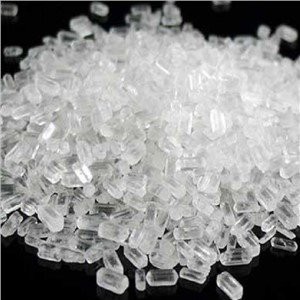
Hey there! I'm a supplier of Zirconite Carbonite, and today I wanna chat about how this cool stuff is identified.
First off, let's get a bit of background on Zirconite Carbonite. It's a pretty unique raw material that has some interesting properties and applications. You can find more about it on our website Zirconite Carbonite.
Physical Properties Identification
One of the first ways we identify Zirconite Carbonite is by looking at its physical properties. Color is often a giveaway. Zirconite Carbonite usually has a distinct color range. It can be a sort of grayish - blue to a deep blackish - gray. But color alone isn't enough, 'cause impurities can sometimes change the color a bit.
Texture is another important factor. It has a relatively smooth texture, but under a microscope, you can see some fine crystalline structures. The density of Zirconite Carbonite is also characteristic. We use a simple density test. By measuring the mass and volume of a sample, we can calculate its density. A proper Zirconite Carbonite sample should have a density within a specific range. If the density is way off, then it might not be the real deal.
Chemical Analysis
Chemical analysis is a crucial part of identifying Zirconite Carbonite. We start with a basic elemental analysis. Using techniques like X - ray fluorescence (XRF), we can determine the elements present in the sample. Zirconite Carbonite contains a specific set of elements, mainly zirconium and carbon, along with some trace elements. If the elemental composition doesn't match what we expect, then it's not Zirconite Carbonite.
We also do a chemical reactivity test. Zirconite Carbonite has a certain reactivity with different chemicals. For example, when it reacts with certain acids, it shows a specific reaction pattern. We compare the reaction of our sample with the known reaction of pure Zirconite Carbonite. If there are significant differences, we know something's up.
Another important aspect is the carbon content. Carbon is a key component of Zirconite Carbonite. We use methods like combustion analysis to accurately measure the carbon content. If the carbon content is outside the normal range for Zirconite Carbonite, then the sample is likely impure or misidentified.
Comparison with Standards
We always have a set of standard Zirconite Carbonite samples. These are samples that have been thoroughly tested and verified to be pure Zirconite Carbonite. When we get a new sample, we compare it with these standards.
We look at things like color, density, and chemical reactivity side by side. If the new sample closely matches the standards in all these aspects, then we're pretty confident that it's Zirconite Carbonite. But if there are notable differences, we need to dig deeper and figure out what's going on.
Instrumental Techniques
In addition to the basic tests, we use some advanced instrumental techniques. One of these is Raman spectroscopy. Raman spectroscopy can give us detailed information about the molecular structure of Zirconite Carbonite. By analyzing the Raman spectra of our sample and comparing it with the spectra of known Zirconite Carbonite, we can confirm its identity.


Another useful technique is infrared (IR) spectroscopy. IR spectroscopy helps us identify the functional groups present in the sample. Zirconite Carbonite has specific functional groups that show up in the IR spectrum. If the spectrum of our sample matches the expected spectrum for Zirconite Carbonite, then we've got a positive identification.
Role in the Industry
Zirconite Carbonite has some important applications in various industries. It's often used in combination with other raw materials like Maleic Anhydride, Penta 98%, and Glycerin. These combinations are used in the production of certain chemicals and materials.
It also has some potential uses in the battery industry. For example, it can be used in combination with Cobalt Hydroxide to improve the performance of certain types of batteries.
Importance of Accurate Identification
Accurate identification of Zirconite Carbonite is super important. In our business, we need to make sure that what we're selling is the real thing. If we misidentify a sample and sell it as Zirconite Carbonite, it can lead to problems for our customers. Their products might not work as expected, and it can damage our reputation.
For researchers and manufacturers, accurate identification is also crucial. They rely on the properties of Zirconite Carbonite to develop new products and processes. If they're working with an impure or misidentified sample, their results might be inaccurate or unreliable.
Conclusion
So, as you can see, identifying Zirconite Carbonite is a multi - step process that involves looking at physical properties, doing chemical analysis, comparing with standards, and using advanced instrumental techniques. It's not always easy, but it's essential to ensure the quality and authenticity of the product.
If you're interested in purchasing Zirconite Carbonite or have any questions about it, feel free to reach out to us. We're always happy to chat and discuss how we can meet your needs.
References
- Textbook on Inorganic Chemistry
- Journal articles on raw material identification