As a supplier of Phthalic Anhydride, I've seen firsthand how this versatile chemical plays a crucial role in the production of plasticizers. In this blog, I'll share some insights into the various uses of Phthalic Anhydride in the plasticizer manufacturing process.
1. Understanding Phthalic Anhydride
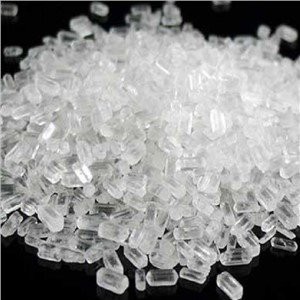
First off, let's get a basic understanding of Phthalic Anhydride. It's a white, crystalline solid with a distinct odor. It's produced by the oxidation of ortho - xylene or naphthalene. You can find more details about it on our website Phthalic Anhydride.


Phthalic Anhydride has a unique chemical structure that makes it highly reactive. This reactivity is what makes it so valuable in the production of plasticizers. When it reacts with alcohols under specific conditions, it forms phthalate esters, which are the main components of many plasticizers.
2. The Role of Plasticizers
Before diving into the uses of Phthalic Anhydride in plasticizer production, it's important to know what plasticizers are and why they're needed. Plasticizers are additives that are used to increase the flexibility, workability, and durability of plastics. They make plastics softer and more pliable, which is essential for a wide range of applications.
For example, in the production of PVC (polyvinyl chloride), which is one of the most widely used plastics, plasticizers are added to make PVC suitable for different products. Without plasticizers, PVC would be hard and brittle, limiting its use. With the addition of plasticizers, PVC can be used to make everything from flexible pipes and cables to vinyl flooring and medical devices.
3. Phthalic Anhydride in Plasticizer Production
Phthalate Ester Formation
The main use of Phthalic Anhydride in plasticizer production is in the formation of phthalate esters. When Phthalic Anhydride reacts with alcohols such as 2 - ethylhexanol, dibutyl alcohol, or isononyl alcohol, it forms different types of phthalate esters. These esters are the most commonly used plasticizers in the industry.
For instance, when Phthalic Anhydride reacts with 2 - ethylhexanol, it forms di(2 - ethylhexyl) phthalate (DEHP), which is one of the most widely used plasticizers. DEHP is known for its excellent flexibility - enhancing properties and is used in a variety of PVC products, including toys, food packaging, and automotive parts.
Improving Plastic Properties
Phthalate esters derived from Phthalic Anhydride can significantly improve the properties of plastics. They lower the glass - transition temperature of plastics, which means that the plastic becomes softer and more flexible at lower temperatures. This is particularly important in applications where the plastic needs to maintain its flexibility in cold environments.
Moreover, these plasticizers can enhance the processability of plastics. They make it easier to melt, mold, and shape plastics during the manufacturing process, reducing energy consumption and production costs.
Compatibility with Plastics
Phthalic Anhydride - based plasticizers have good compatibility with a wide range of plastics, especially PVC. They can be easily blended with PVC resins, ensuring uniform distribution throughout the plastic matrix. This uniform distribution is essential for achieving consistent properties in the final plastic products.
4. Applications of Phthalic Anhydride - Based Plasticizers
Construction Industry
In the construction industry, Phthalic Anhydride - based plasticizers are used in PVC pipes and fittings. The flexibility provided by these plasticizers allows the pipes to withstand bending and movement without cracking. They also make the pipes resistant to corrosion, extending their lifespan. Additionally, in vinyl flooring, these plasticizers give the flooring its soft texture and durability, making it suitable for high - traffic areas.
Automotive Industry
The automotive industry uses Phthalic Anhydride - based plasticizers in many applications. For example, in car interiors, PVC parts such as dashboards, seat covers, and door panels are made more flexible and comfortable using these plasticizers. They also help in reducing noise and vibration, improving the overall driving experience.
Consumer Goods
A large number of consumer goods, including toys, footwear, and food packaging, rely on Phthalic Anhydride - based plasticizers. In toys, the plasticizers make the toys soft and safe for children to handle. In food packaging, they help in maintaining the integrity of the packaging, preventing it from cracking and protecting the food inside.
5. Comparison with Other Raw Materials
While Phthalic Anhydride is widely used in plasticizer production, there are other raw materials available as well. For example, Maleic Anhydride can also be used to produce plasticizers. However, maleate esters formed from Maleic Anhydride generally have different properties compared to phthalate esters. Maleate - based plasticizers are more volatile and have lower heat stability, which limits their use in some applications.
Penta 98% is another raw material that can be used in the production of certain types of plasticizers. But it's often used in combination with other substances and has different reactivity and property - enhancing characteristics compared to Phthalic Anhydride.
Rosin Resin is a natural raw material that can be used in some plastic applications. However, it may not provide the same level of flexibility and processability as Phthalic Anhydride - based plasticizers in PVC products.
Zirconite Carbonite is mainly used in other industries rather than plasticizer production, but it's important to note that different raw materials have their own unique uses and limitations.
6. Contact for Procurement
If you're in the business of plasticizer production or are looking to incorporate Phthalic Anhydride into your manufacturing process, I'd love to have a chat with you. Our company is a reliable supplier of Phthalic Anhydride, offering high - quality products at competitive prices. We can provide you with the necessary technical support and ensure a smooth supply chain. Don't hesitate to reach out for more information or to start a procurement discussion.
References
- "Plasticizers: Principles and Practice" by George Wypych
- "Handbook of PVC Formulating" by Edward J. Wickson
- Industry reports on chemical raw materials and plasticizer production.